
The Killing of Noor BM: LGBTQ+ Visibility Amid Harassment and Violence
This report documents the 2023 killing of Noor BM in Baghdad and examines his public visibility within Iraq’s LGBTQ+ community, harassment and threats faced by people who openly express their identity, the incident itself, surveillance footage, and the role of the state in protection, investigation, and accountability.
Content
The Killing of Noor BM
On September 25, 2023, Iraqi content creator known as Noor BM, identified in security and media reports as Muhammad Noor Samir Muhammad, was killed in Baghdad after being shot.
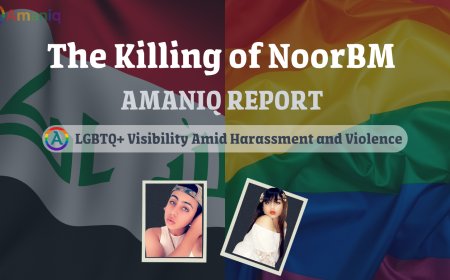
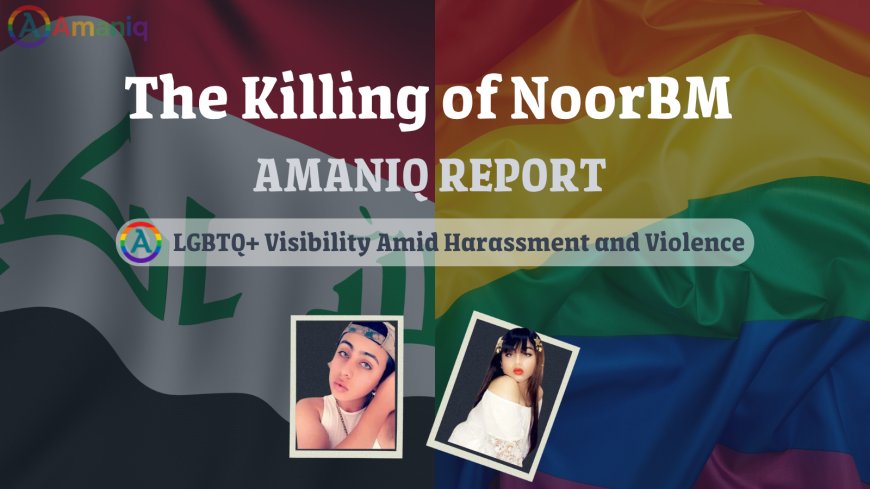
Noor was known for his presence on social media. During the later period of his life, he appeared publicly through his appearance, clothing, and content, including wearing feminine clothing and makeup. His public presence became closely associated with discussions surrounding gender expression and Iraq’s LGBTQ+ community.
According to media reports citing security sources, Noor was shot and killed, and authorities opened an investigation into the incident.
Through this report, AMANIQ seeks to document the case not only as an individual killing, but also as a case that highlights the risks that LGBTQ+ people may face when expressing their identity or appearance publicly, as well as broader challenges involving harassment, threats, violence, protection, and accountability.
Incident Report
According to a security report circulated following the incident:
“At 13:30, a criminal incident occurred in the Mansour area, Mahalla 611, Alley 48, opposite Al-Andalus Kindergarten. The scene was attended, where the victim known as ‘Noor BM,’ Muhammad Noor Samir Muhammad, born in 2000, was found.”
The core details correspond with reports published by Iraqi media concerning the killing of Noor BM in Baghdad, which described the shooting and the subsequent security investigation.
Published reports stated that Noor was shot three times and that the attacker fled the scene while security forces began investigative procedures.
AMANIQ documentation note:
The information contained in the security report is presented as part of the materials circulated and documented concerning the incident. AMANIQ does not consider the security report alone to constitute a final judicial determination establishing the identity of the perpetrator or the motive behind the crime.
What Happened?
According to media reports covering the incident, Noor was shot by an individual riding a motorcycle before the attacker left the scene.
Other reports stated that the attacker was wearing clothing associated with food-delivery services and a helmet, making identification more difficult.
Iraqi media outlets also published surveillance footage that they described as documenting moments connected to the attack.
The available material indicates that the crime occurred in a public area of Baghdad and that the attack was carried out within a short period before the attacker fled.
Surveillance Camera Footage
Surveillance footage connected to the incident was circulated following Noor BM’s killing.
AMANIQ presents the footage for documentation and archival purposes, rather than to display graphic or disturbing material.
Content Warning
The footage may contain scenes related to a shooting and may be disturbing to some viewers.
Note: Surveillance footage alone should not be considered sufficient evidence to establish the identity of the perpetrator or prove the motive behind the crime. It is presented as part of a broader body of evidence and sources related to the case.
Noor BM and Public Visibility
Noor BM maintained a visible presence on social media and, during the later period of his life, appeared publicly wearing feminine clothing and makeup and presenting himself in a way that reflected his personal expression.
For members of the LGBTQ+ community, social media can provide space for self-expression, communication, community building, and connection with others who share similar experiences.
However, public visibility can also carry risks, particularly in environments where social stigma, hate speech, and harassment exist.
Media reports indicate that Noor had previously faced criticism, threats, and harassment related to his public presence.
When Public Visibility Becomes a Risk
The case of Noor illustrates some of the challenges that people may face when they choose to express their identity or appearance publicly.
Risks may include:
- Offensive comments.
- Online bullying.
- Threats.
- Defamation and public shaming.
- Exposure of personal information.
- Non-consensual sharing of images.
- Incitement to violence.
- Harassment or physical attacks offline.
In some cases, harassment that begins online can move into the real world.
Noor’s case therefore raises an important question about the relationship between personal expression online and the security risks that may accompany it.
Was Noor’s Killing Connected to His Identity or Public Expression?
This remains one of the most sensitive questions surrounding the case.
Noor was known for his public presence and gender expression, and available information indicates that he had previously experienced harassment and threats.
However, establishing that his identity or membership in the LGBTQ+ community was the direct motive for his killing requires clear evidence from an official investigation, judicial findings, or reliable independent sources.
For this reason, AMANIQ does not present such a motive as an established judicial fact without sufficient evidence.
At the same time, the absence of a publicly established motive does not mean that the context preceding the killing should be ignored, including threats and harassment that people may experience because of their identity, appearance, or public expression.
LGBTQ+ People and Social Media in Iraq
Social media has become an important part of life for many LGBTQ+ people in Iraq.
These platforms allow people to:
- Express themselves.
- Connect with others who share similar experiences.
- Build supportive communities.
- Share stories and experiences.
- Access information and support.
However, the same space can also become a source of risk.
Publicly available content can be used to identify people, expose their identities, or target them with harassment and threats.
This creates a difficult reality: a platform that gives someone a space to express themselves can also become a source of danger.
Harassment and Violence
Violence does not always begin with a physical attack.
In some cases, a chain of risk may begin with hate speech, online bullying, or threats and then develop into public exposure, identity disclosure, or direct threats.
Protecting LGBTQ+ people therefore involves more than preventing physical attacks. It also requires addressing threats, harassment, and incitement before they escalate into violence.
Noor’s case highlights the importance of examining this broader chain of risks rather than treating the killing as an isolated incident.
The Role of the State and the Responsibility to Protect
The case of Noor raises an important question about the responsibility of the state toward people who face threats or violence.
From a human-rights and rule-of-law perspective, authorities have responsibilities that include:
- Conducting serious investigations into violent crimes.
- Investigating credible threats where information is available.
- Identifying perpetrators.
- Bringing those responsible for crimes to justice.
- Protecting evidence and witnesses.
- Preventing impunity.
- Providing safe mechanisms for accessing police and justice institutions.
In Noor’s case, authorities announced an investigation following the killing.
But documenting the case requires asking more than:
Who killed Noor?
It also requires asking:
Are there effective mechanisms to protect people who face threats because of their identity, appearance, or public expression?
Investigation and Accountability
Understanding the truth in cases of violence requires more than establishing how a crime occurred.
It also requires asking:
- Who carried out the crime?
- Who planned it?
- What was the motive?
- Were there previous threats?
- Were there warning signs?
- Were those responsible held accountable?
- Did the victim’s family receive justice?
These questions remain an important part of documenting the case of Noor BM.
Why Does AMANIQ Document Noor BM’s Case?
AMANIQ is not documenting Noor’s case simply to reproduce an old news story.
The purpose is to preserve a record documenting the case of a person from Iraq’s LGBTQ+ community, the circumstances surrounding his killing, and the broader challenges that members of the community may face.
Documenting individual cases can help us understand:
How do LGBTQ+ people live?
What risks can they face?
What happens when identity becomes publicly visible?
And how do state institutions respond when violence occurs?
Conclusion
The killing of Noor BM in Baghdad in September 2023 raises important questions about the safety of LGBTQ+ people who maintain a public presence in Iraq.
Available sources document the killing, the opening of an investigation, and the existence of surveillance footage connected to the incident.
However, determining the final motive for the crime, and whether it was directly connected to Noor’s identity or public expression, requires reliable evidence and investigation.
Regardless of the final determination of motive, the case highlights a broader reality: LGBTQ+ people who live or express themselves publicly may face harassment, threats, hate speech, and violence.
For AMANIQ, documenting such cases is not only about preserving the past. It is also about understanding the present and protecting the future.
Expressing one’s identity should never turn a person’s life into a target for violence or threats.